

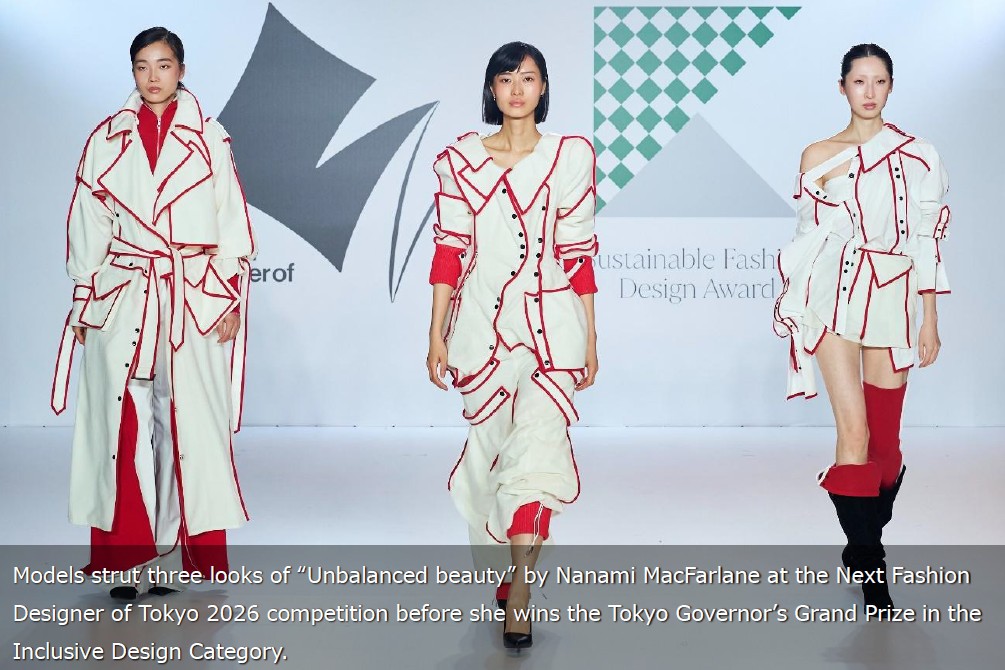
Nanami MacFarlane, a creator born with a hand impairment, and part-time doctor Wakabayashi Yui have much in common. The two young women are among the few chosen to participate in Tokyo’s effort to raise its presence in global fashion.
As aspiring fashion designers, they have been making clothing, notably for people with specific needs. Some of them are missing limbs or feel discomfort wearing medical corsets.
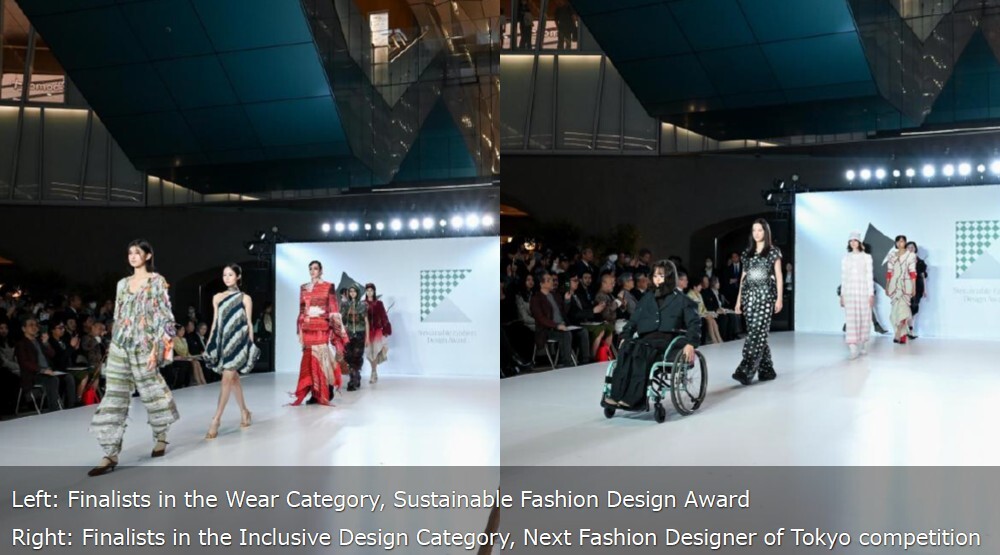
On March 29, an annual fashion competition organized by the Tokyo Metropolitan Government (TMG) honored 14 designers, including MacFarlane and Wakabayashi, with 16 awards for their excellence in free, inclusive design, sustainable wear and sustainable fashion goods categories. At stake were the Next Fashion Designer of Tokyo (NFDT) title and the Sustainable Fashion Design Award (SFDA).
The TMG has hosted this double-feature contest among Tokyo-based designers for four years running—with the stated aim of establishing “Tokyo alongside Paris, Milan, New York, and London as a premier global fashion capital.” And its mission is defined as to “discover and nurture next-generation fashion designers capable of competing on the global stage.”
Website: Next Fashion Designer of Tokyo 2026
https://nfdt.metro.tokyo.lg.jp/en/
Website: Sustainable Fashion Design Award 2026
https://sfda.metro.tokyo.lg.jp/en
Embracing Impairment as “Beautiful Individuality”
“I focused on congenital limb disabilities this time, but moving forward I want to talk with people with a wider range of disabilities,” McFarlane, 21, said in an interview. “So I can create clothing that everyone finds comfortable to wear.”
England-born MacFarlane admitted she had struggled to become open about the appearance of her left hand in which fingers other than the thumb are short. “I hope everybody sees it as beautiful individuality.”
Wakabayashi, 28, who works about once a week as an internal medicine doctor, remembered her patients say, “It’s uncool to wear a corset.” “Since I’m also involved in fashion, I thought there might be a solution—that’s what got me started.”
To hone their couture skills, both have been attending century-old Bunka Fashion College, the alma mater for celebrated designers such as Takada Kenzo and Koshino Junko.
‘Spread Your Wings to the World’: Tokyo Governor
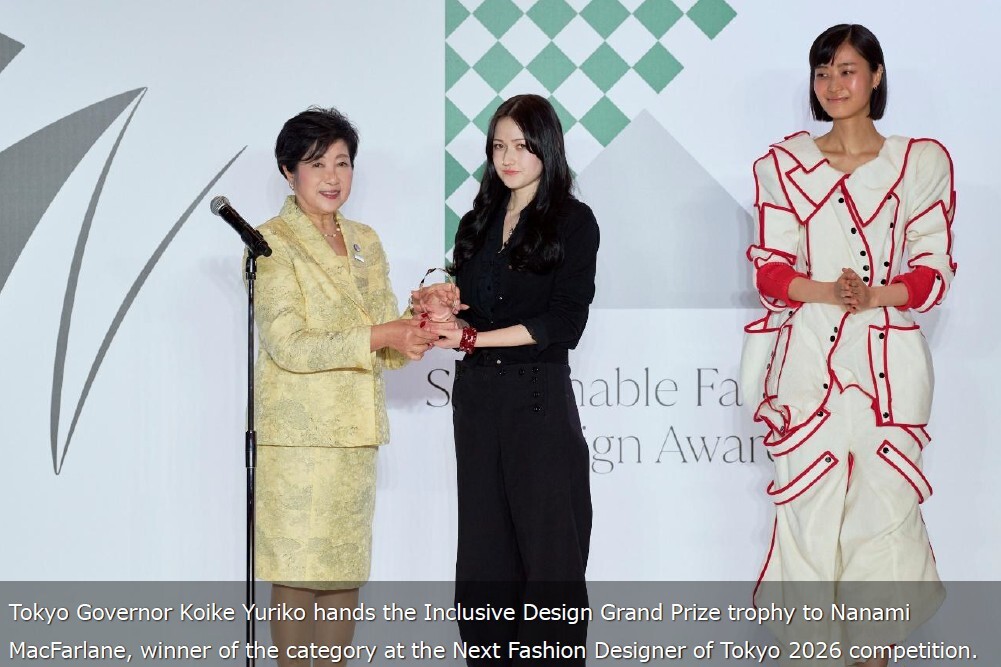
Of all the past NFDT/SFDA award winners, 43 have been playing an active role in the world of fashion and 37 have launched their own brands, Tokyo Governor Koike Yuriko told the award ceremony.
“I believe Tokyo is truly a global hub for fashion and a vital place for nurturing talent,” she said. “I sincerely hope many of you will continue to take on new challenges and spread your wings to the world.”
The Next Fashion Designer of Tokyo title is contested among students living or studying in Tokyo, while the Sustainable Fashion Design competition engages Tokyo-based amateur designers who reuse kimono fabrics and other materials for their works.
Grand Prize winners receive the prize money of one million yen (about 6,300 dollars) each. The metropolitan government also helps them launch their brands under a one-year mentorship program and present their works at an event during Paris Fashion Week. For each category, there are also two excellence awards and a special select award.
For this year’s event, about 2,000 entries were made and 35 of them lined up for final judging in the form of a runway show at Toranomon Hills, a mixed-used high-rise in central Tokyo.
One may wonder what the reason is behind this forward-looking initiative.
“Following the downturn of Japan’s economy and the coronavirus pandemic, its fashion industry’s momentum is slowing down,” a director at the TMG’s Bureau of Industrial and Labor Affairs, told fashion media comparing the 1980s to today.
Sako Masanori, charged with promoting the apparel and fashion industry at the bureau’s Commerce and Industry Division, noted that Japan is “no longer producing as many world-class designers—such as Miyake Issey and Yamamoto Yohji—as it once did.” “Against this background, this initiative was launched,” he was quoted by WWDJAPAN as saying. Japan has also famously spawned many other pioneers in global fashion such as Mori Hanae, Kawakubo Rei and Yamamoto Kansai.
Award Winners: How They Look
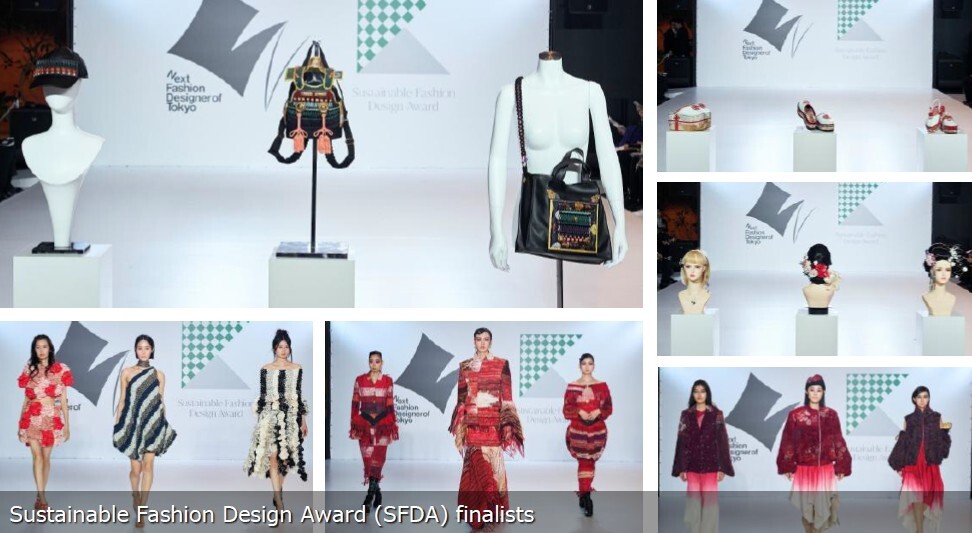
Wear: https://sfda.metro.tokyo.lg.jp/en/secondary-selection2026_wear/
Fashion Goods: https://sfda.metro.tokyo.lg.jp/en/secondary-selection2026_goods/
“It’s easy to take off whether you use your right hand, your left hand, or even if you have no arms,“ MacFarlane said of her work, titled “Unbalanced beauty.” The design won the Tokyo Governor’s Grand Prize for the Next Fashion Designer of Tokyo “Inclusive Design” category. Her presentation consisted of three white looks with bold red lines and openings that allow for smooth dressing and undressing from any point.
She explained in a concept statement that her own experience with a congenital hand issue had inspired a “design that would unify the body and clothing as one.” “Rather than hiding disabilities, it proposes a new fashion that celebrates them as individuality and transforms them into a source of confidence.”
The corset designer, Wakabayashi, 28, vowed to continue wearing two hats to maintain her skills as a doctor. Citing Italian fashion legend Giorgio Armani, who pursued medical studies as a young man, she said that a career change from medicine to fashion “is not so uncommon.” “This time, I focused on creating work from a medical practitioner’s perspective.”
Her presentation, titled “Corset × Dress,” consisted of three looks, featuring the corset elements that can be freely connected at different points. This allows for adjustments in volume and length, “making it suitable for various body types and conditions,” she explained.
An Excellence Award for a Parka with ‘Finger Holes’
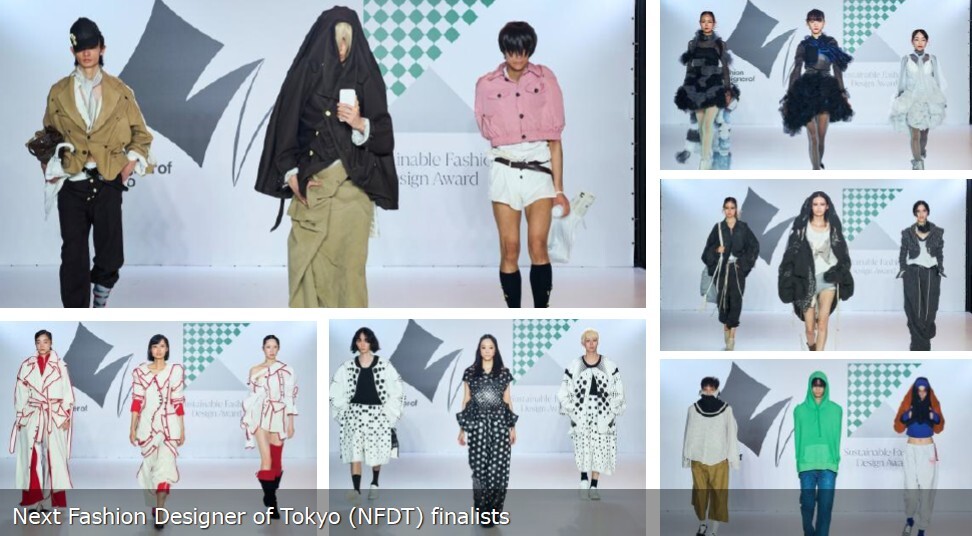 Free: https://nfdt.metro.tokyo.lg.jp/en/secondary-selection2026_free-en/
Inclusive Design: https://nfdt.metro.tokyo.lg.jp/en/secondary-selection2026_inclusive-en/
Also unique among the award winners was “Swipe up” by Takahashi Koume, a student at Sugino Fashion College. The work featured a simple hooded green parka with finger holes that allow the index finger to move freely—so it can swipe smartphone screens with ease. It won her an Excellence Award in the Next Fashion Designer of Tokyo Free (open theme) category.
This category’s Grand Prize went to “Scenes Inside the Train” by Ohnishi Yotaro of ESMOD Tokyo School. This piece captures “fleeting moments inside a train, transforming that dense atmosphere into fashion,” according to its concept statement.
The Grand Prize in the Sustainable Fashion Design’s “Wear” category was conferred on “Shrink” by Katayanagi Yuna of Tokyo Designplex Institute. The work featured elastic gathers that add stretch and volume to non-stretch kimono fabric, making the garment easier to wear and move in. “With sustainability in mind, the design uses bias tape for efficient pattern cutting and simple construction,” she explained.
A cap, a backpack with an armor and a shoulder bag meticulously modeled after samurai armors amused the press, industry insiders and general visitors in the gallery. The set, titled “Armor Backpack,” was awarded the Grand Prize in the Sustainable Fashion Design’s “Fashion Goods” category. Created by Yagi Kanako of Tama Art University, it features a fabric portion made from traditional obi (kimono sashes), as well as straps crafted from obi cords.
‘Everyday Life’ Emerges as a Central Motive
Everyday life was a common and central motive for many works at the Tokyo competition, in keeping with a trend seen at the world’s big-time Fashion Weeks, experts say.
“A key feature of this event was that the various aspects of everyday life, which have become routine, served as a source of inspiration,” Hibino Katsuhiko, President of Tokyo University of the Arts, told the award ceremony after presiding over the judge panel. He particularly cited clothes themed on stress in the subway and finger holes in the parka.
Referring to inclusive designs, including MacFarlane’s effort to turn handicaps into individuality and Wakabayashi’s ideas coming from the medical frontline, Hibino, an accomplished graphic designer, said: “Items have gathered here with their diverse backgrounds that help broaden the scope of fashion.”
Fashion writer Miyata Rie pointed out that many of the creations were “inspired by familiar scenes and genuine emotions.” She wrote in her online column that the theme of “everyday life” is “actually a trend that has been evident at the four major fashion weeks in recent years.”
“I sense that the perspective of how to dress according to one’s personal style in daily life—rather than just for special occasions—is gaining traction globally.”
Experiences that ‘Money Alone Can’t Buy’
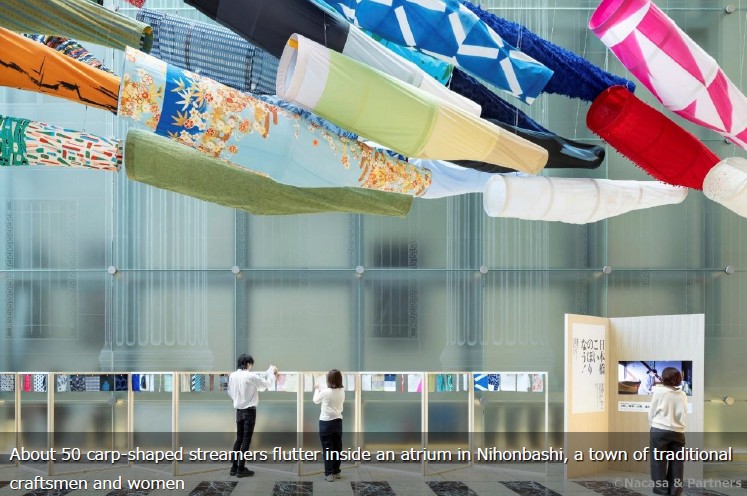
The young fashion designers’ competition was staged in a tie-up with TOKYO CREATIVE SALON 2026—the seventh annual festival of fashion, design and other arts and crafts. The festival was held March 13-22 this year across nine iconic districts to promote Tokyo’s profile as a global hub of creativity. The Tokyo Metropolitan Government (TMG) has supported this creativity fair since its inception.
In Paris this January, 14 awardees of past NFDT/SFDA competitions strutted their stuff at a runway show after a half year of preparation, as part of the TMG’s program to continue support for the Tokyo event’s alumni.
According to a report by the NFDT/SFDA secretariat, the alumni presented 75 looks at the show, watched by about 350 media members, buyers and other industry insiders, at the Palais de Tokyo contemporary art center. The event “received high praise for its innovative use of materials and unique concept,” the report said.
One of the runway participants was Yamaoka Kanei, 23, who won the Special Selection Award in the 2024 Next Fashion Designer of Tokyo free Category with a work based on traditional sashiko stitching.
Last year, he launched his own brand “KANEI” focused on the concept of “Clothing that serves as a traveler’s compass.”
“It’s not just about winning the award; the support afterward is extensive,” Yamaoka told the influential daily Asahi Shimbun about the TMG’s support for young fashion designers. “I’ve even been able to go to Paris, where I’ve had many experiences that money alone can’t buy.”
List of 2026 Award Winners
* Family names first
* Work title, designer’s name, affiliation
Next Fashion Designer of Tokyo (NFDT) 2026
Free Category (open theme)
・ Tokyo Governor’s Grand Prize:
“Scenes Inside the Train” by Ohnishi Yotaro (ESMOD Tokyo)
・ Tokyo Governor’s Excellence Award:
“Swipe up” by Takahashi Koume (Sugino Fashion College)
“Contours of Existence” by Yasuda Kotaro (ESMOD Tokyo)
・ Special Selection Award (public vote by audience and online viewers):
“Reinterpreting Oversize” by Takahashi Ibuki (Bunka Gakuen University)
Inclusive Design Category
・ Tokyo Governor’s Grand Prize:
“Unbalanced beauty” by MacFarlane Nanami (Bunka Fashion College)
・ Tokyo Governor’s Excellence Award:
“INVERSA” by Inoue Fuya (Tokyo Mode Gakuen)
“Corset × Dress” by Wakabayashi Yui (Bunka Fashion College)
・ Special Selection Award (public vote by audience and online viewers):
“Corset × Dress” by Wakabayashi Yui (Bunka Fashion College)
Sustainable Fashion Design Award (SFDA) 2026
Wear Category
・ Tokyo Governor’s Grand Prize:
“Shrink” by Katayanagi Yuna (Tokyo Designplex Institute)
・ Tokyo Governor’s Excellence Award:
“Nishiki Brocade — Weaving Scarlet and Black” by Sakano Sena (general application)
“REGENERATE” by Nishizaki Yuna (Bunka Fashion College)
・ Special Selection Award (public vote by audience and online viewers):
”’OMOTEURA’ That Which Dwells Under the Torn Surface” by Hananoi Rumi (general application)
Fashion Goods Category (bags, accessories, etc.):
・ Tokyo Governor’s Grand Prize:
“Armor Backpack” by Yagi Kanako (Tama Art University)
・ Tokyo Governor’s Excellence Award:
“MARUDE Zori” by Tokairin Rimiko (general application)
“Reincarnation and Sublimation” by Nakada Minami (Keio University)
・ Special Selection Award (public vote by audience and online viewers):
“MARUDE Zori” by Tokairin Rimiko (general application)




Leave a Comment
You must be logged in to post a comment.